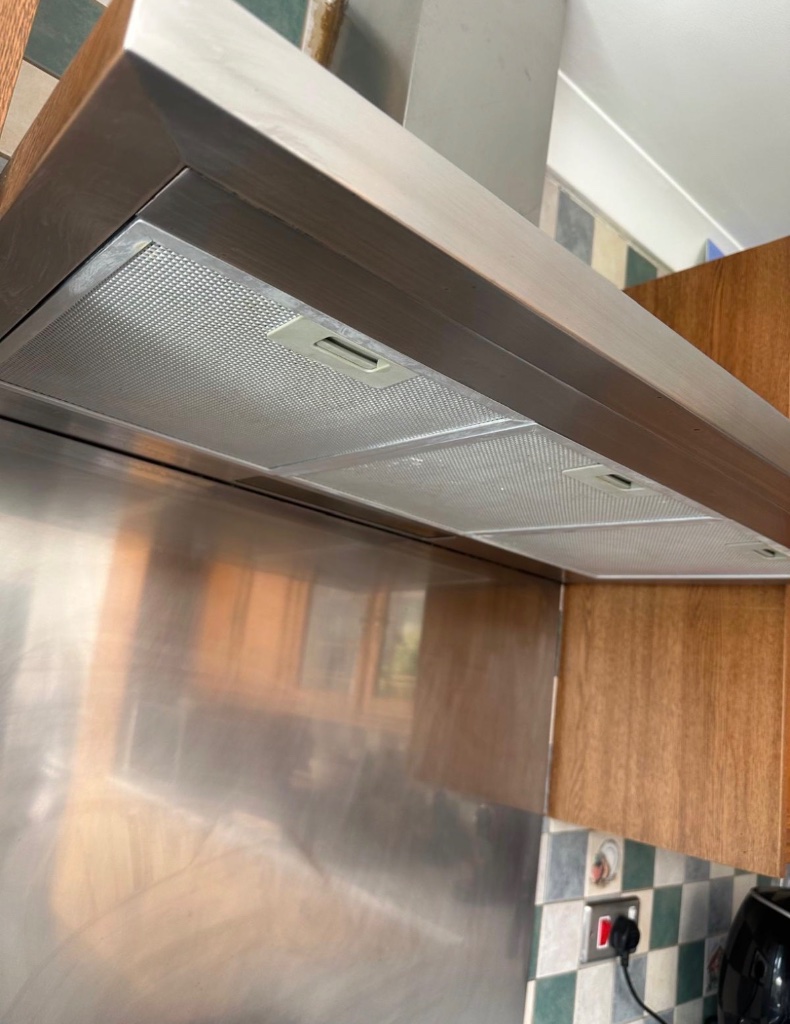
What's Lurking in Your Extractor Filters? The Grease Build-up Reality Check
Your extractor filter is working overtime - and quietly turning into a grease trap. Here's what's really hiding behind that metal mesh.
The Filter You Forget About
It sits above your hob, quietly doing its job every time you cook - pulling steam, smoke and cooking odours out of your kitchen. But when did you last actually look at your extractor filter? For most households across Kent, Surrey and Sussex, it's a classic case of out of sight, out of mind. Unfortunately, that neglect comes at a cost, and it's not a pretty one.
What's Really Building Up in There
Every time you fry, roast, grill or simmer, tiny airborne grease particles get pulled through your extractor filter. Over weeks and months, this grease doesn't just disappear - it clings to the mesh, slowly hardening into a thick, sticky layer. Add in dust, food particles and general kitchen grime, and you've got a build-up that's doing far more harm than good.
Run your finger along the filter mesh right now (carefully) and you'll likely find:
- A tacky, yellowish residue that doesn't wipe away easily
- A faint rancid smell, even when your kitchen looks clean
- Visible clumps of grease trapped in the mesh layers
If this sounds familiar, you're not alone - but it's worth taking seriously.
Why This Matters More Than You Think
A grease-clogged extractor filter isn't just unpleasant - it's a genuine problem for your home and health. Here's why:
Fire risk - Grease is flammable, and a build-up near heat sources is a recognised fire hazard in kitchens across the UK.
Reduced efficiency - A clogged filter can't pull steam and smoke effectively, leaving your kitchen hazier, steamier and more prone to condensation and mould.
Air quality - Trapped grease can harbour bacteria and emit stale odours that circulate back into your kitchen every time the extractor runs.
Appliance strain - Your extractor motor has to work harder to pull air through a clogged filter, which can shorten its lifespan and increase energy use.
DIY vs Professional Cleaning: Know the Limits
Soaking filters in hot soapy water can help with light grease, but once build-up has hardened over months (or years), DIY methods often just move the grease around rather than fully removing it. Dishwashers can sometimes help, but many filters warp or degrade with repeated high-heat cycles, and grease residue can transfer to other items.
For a genuinely deep clean, professional treatment reaches grease trapped deep in the mesh layers and surrounding extractor unit - areas a kitchen sink simply can't tackle.
The Fordwell Approach: Safe, Thorough, Eco-Friendly
At Fordwell Oven & Appliance Care, we specialise in restoring extractor filters and units to genuinely like-new condition. We use non-caustic, eco-friendly cleaning solutions that break down even stubborn, months-old grease without harsh chemical fumes or damage to delicate mesh and components.
Our team serves homes across Kent, Surrey, East Sussex, West Sussex and Essex, and extractor cleaning is one of our most requested services for good reason - most customers are genuinely shocked at what comes off during the process.
Book Your Extractor Clean Today
If it's been more than a few months since your extractor filters saw a proper deep clean, now's the time. Don't wait for reduced performance, lingering odours, or worse - a fire risk - to force the issue.
Get in touch with Fordwell Oven & Appliance Care today and let our friendly local experts give your extractor filters the reality check they need, using safe, eco-friendly methods you can trust.
Need a professional? We can help.
Save time and get better results — book Fordwell's professional oven and appliance cleaning service today.